Not done yet…

This is my last Stepping Out of the Boat blog post. I am back in Scotland having said a bitter-sweet goodbye to colleagues and friends in Tiberias, Jerusalem and beyond. It is a momentous week for other much bigger reasons too. On 7th October the two-year anniversary of the Hamas attack on festival goers and kibbutzim was marked. For families of hostages, alive and dead it is a painful anniversary. For Palestinians, the loss of life in Gaza and the increased pressure on Palestinians in the West Bank, East Jerusalem and in Israel continues.

Today, 9th October,[1] we woke to the news that talks in Sharm El-Sheikh have made progress and a ceasefire and exchange of hostages and prisoners has been agreed. Any progress has to be welcomed, but it is hard not to be cynical about it. Overnight, bombing in Gaza City has continued. The Gaza Health Ministry reports the death toll has reached 67,200, with 169,890 injured, amid the ongoing conflict. Many children are now showing effects of malnutrition and starvation and immediate aid and medical relief is needed, and will be too late for some. More than 80% of buildings and 95% of farmland have been destroyed.

In a critical period over the next 72 hours, if the plan is ratified by the Israeli government, hostages living and dead are due to be released and more than 2000 Palestinian prisoners. There is some doubt as to whether Hamas and their allies will be able to return the remains of all the deceased, and trust between the two sides is very low. Israel has broken the cease fire before.


[1] At a time of fast changing news I have decided to keep this snapshot frozen in time. Today, 13/10/25 it seems hostage exchange is about to begin and Trump is to speak in the Knesset.

Other news reminds me that the humiliation and destruction of Palestinian lives and homes is not restricted to Gaza. In Um al Kheir, settlers are laying foundations for a new road on designated Palestinian land. The olive harvest is approaching and there are real fears that settler aggression will make it even more difficult to graze flocks and harvest crops, making a precarious lifestyle untenable. Layan Nasir, today, the same day the agreement was reached in Sharm El-Sheikh, was taken from a court appearance to an eight month prison sentence. Her ‘crime’ has never been explained. There is some speculation that she will be added to the number of Palestinian prisoners due to be released as part of the peace deal. As the Gaza Flotilla activists have testified, any time spent in Israeli detention is horrific.

What does it all mean? Many may be desperate to ‘get back to normal’, but for Israelis and Palestinians ‘normal’ is not progress towards peace. The Trump Peace Plan is notably evasive about the role of Palestinians in any future governance of the Gaza strip. Even if Hamas are excluded, any peace plan that does not take seriously the Palestinians’ right to self determination is no peace plan. There are Israeli voices making this clear, but not enough. Most Israelis are content to have Palestinians living behind the Security Barrier with no prospects, and attempt to distance themselves from settler violence and expanding illegal settlements. But the truth is that without a change of government policy (by no means guaranteed by a change of government) the 77 year old injustice will continue.

If the ceasefire holds, the temptation for a weary world will be to quietly shift away from sanctions and accountability for war crimes and towards normalisation again. Recognition of the rights of Palestinians must not be seen as a reward for Hamas’ actions on October 7th, but rather as a long overdue correction to longterm injustice. Given the undermining of international law and the functions of the UN, and the positions taken by the US and the UK and others which seem to hold no accountability for the State of Israel, it is hard to be optimistic about this.

The conflict is still characterised as a war, as if there is an equivalence between a well-armed nuclear power and the Palestinian people, ill-served by the Palestinian authority and living in an apartheid system, whether in Israel or the West Bank and Gaza. And yet, it seems that Palestinian voices have been heard in the world and in the church in new ways. One of the courageous and prophetic Palestinians who have consistently challenged the church and denounced Christian Zionism is Rev Dr Munther Isaac. In an X post today he wrote, ‘Rain falls this morning on Ramallah- the first in a long while-. And today, a ceasefire is announced in Gaza. May both be signs from heaven – that life will return to the land, that the cries will turn to songs, and that justice will finally prevail.’

Alison Phipps, an academic from the University of Glasgow, who throughout the war on Gaza has been in touch with students and colleagues inside Gaza, and spoken boldly and written passionately, sums up her hopes and fears in a new poem today:

Mean Peace

Mean peace

Not another mean peace.

May this be

A peace that is not

more pieces of betrayal

A peace that can sustain life

A just peace that lasts

and makes new

A peace that heals

A peace that heals

A peace that heals

If you ask me how I feel you may well get a non-committal answer. How do I feel? Glad to be home and sorry to be leaving. Proud of friends and colleagues and anxious for their future. Pleased to hear news of a ceasefire but doubtful it will hold. Hopeful that there is space for talks but disappointed that Palestinians are still not equal dialogue partners. I remember the American civil rights mantra, adopted by the Poverty Truth Communities here: ‘Nothing about us without us, is for us.’

I finish with a Jewish prayer taken from the booklet of prayers produced for the Week of Prayer for World Peace 12-19th October 2025[1]

WAR is – in whatever its shape or form – is the ultimate in wickedness, madness, sin, injustice, ugliness…

PEACE then – without definition – must be the ultimate in Love, kindness, truth, compassion, justice…

WE PRAY that we may daily choose PEACE and share it in our lives, families, places of work, friends, group activities, streets, communities, the world… We pray for an end to the violence and bloodshed, and ask you to bring a new dawn of peace across the Middle East. May there be no more hatred, rancour, strife or conquest. Let there be only love and a great peace among us.

Amen. May it be so.


[1] https://cofchrist.org.uk/wp-content/uploads/2025/09/WPWP-Leaflet-25-26-v5.pdf

Running out of words

There hasn’t been a blog here from me for some time. That’s partly because words seem to have had little or no effect on the horror unfolding in Gaza, and in the West Bank and Jerusalem, and I’ve been reluctant to add to the noise. And partly because I ran out of words.

I am currently in Scotland, having left Israel during the exchange of missiles between Israel and Iran which left much destruction and yet more dead.

I’m reflecting on my posting as Mission Partner with the Church of Scotland, thinking over my time and wondering what I’ve achieved.

Photo by Manuel Cortu00e9s on Pexels.com

I took up my post in September 2021, but because of visa restrictions in the wake of the Covid pandemic, I wasn’t able to travel to Israel Palestine til April 2022. The pattern of reading and observing from afar, joining online seminars and leading worship on Zoom has turned out to be more central to my role than anyone would have imagined or wanted.

Nevertheless, despite heightened security concerns which restricted travel in the West Bank and the relative isolation of being away from the hub of Jerusalem, I was able to settle in and make connections and get alongside staff, and get to know the congregation. Looking back, that all seems a long time ago. I was able to connect with groups of pilgrims and guests and the congregation in Tiberias, different Sunday by Sunday, because tourists would be present in greater or lesser numbers, and I began to try to make sense of what I was seeing and hearing.

In October 2023 I was due to visit Gaza with my Church of Scotland colleague and an experienced ecumenical partner who’d been there many times. Four days before our visit, Hamas attacked. In many ways it feels as if Israelis have been caught up in reliving the shock, outrage and fear of Hamas’ actions ever since. The appalling stories are told and retold. There are still hostages held in Gaza. IDF soldiers and reserves have been called up repeatedly and war has been waged on Gaza, in Lebanon, and in less conventional ways in the West Bank and East Jerusalem.

The death toll in Gaza, the famine, the cynical use of aid as a weapon, the arrest of thousands who are being held without charge and in horrific conditions, have all taken place in plain sight. Many Israelis, however, feel that what they perceive as an existential threat justifies any means. All Palestinians are potential terrorists. The right to self defence is claimed by Israel but not recognised for Palestinians. ‘These are difficult times,’ they say.

There are, of course, Jewish Israelis and Palestinians and Arab Israelis who recognise the humanity of the other, all made in the image of God. But it is difficult to have true dialogue or make progress towards a just and peaceful outcome while illegal settlements are expanding and the occupation continues and as Israel’s vision of a Greater Israel becomes more mainstream. There are Israeli troops in Lebanon and Syria and the latest ‘plan’ for Gaza involves indefinite occupation and forced removal of Palestinians, in what is being seen as a third Nakba. (The first happened in 1948, the second has been ongoing since, and the third is this determined push to remove, by any means, Palestinians from the land.)

Musalaha, an organisation which for 20 years has brought Israelis and Palestinians together, now holds the position that only Israelis who renounce the Occupation can be dialogue partners. In a recent blog, Tamar Haddad, Project Manager, wrote:

‘Reconciliation is unattainable when Zionists refuse to recognize my humanity as a Palestinian. I remain open to reconciling with Israeli-Jews who are willing to co-resist with me against the realities of genocide and famine. However, I cannot reconcile with Zionist Jews or Christians who justify this suffering. The only point at which I can envision reconciling with a Zionist is when they start the process of acknowledging the harm their ideology and version of religion has inflicted on Gaza—when they name it, grieve it, and work to dismantle it.’

Palestinian Christians have long asked why in the worldwide church the peace and security of Israelis is privileged over Palestinian rights to statehood, to existence, even to life.[1] It seems there is movement among the mainstream churches to be bolder in support of justice for Palestinians. Kairos Palestine recently welcomed a new statement by the World Council of Churches which names apartheid and calls for an end to occupation.[2] The Iona Community has recently updated its statement on Israel Palestine to reflect the increasingly grave situation and the deepening injustice.

The update includes the following prayer:

God of Mercy, Salam, and Generosity

Stretch Your kind hand over Gaza, where
man-made fear, terror, and starvation
have become heavy burdens – day and night.

Protect the children, the innocent,
the elderly and all those who cry out for shelter, food, peace, justice, and hope.

Quench the fires of hatred and racism
and sow the seeds of lasting peace for all.

Make the painful cries of mothers, new mothers, babies,
and pregnant women in Gaza
move the deaf and blind world to do concrete actions –
not pity, but solidarity and real good deeds.

Let surviving olive trees remind us: peaceful life returns

In Gaza’s hardest and darkest times,
light candles of hope in every soul –
mothers, fathers, children and all in deserted and oppressed Gaza

Lord of lords
Lord of the worlds

Bring justice and peace for heavily bleeding Gaza
for so long so long so long.

Pour patience and courage in our weak and broken hearts

Heal our deep pains
grant us Your mercy,
justice and peace.

Accept our prayers,
Amen.

The Iona Community says, ‘This prayer was written in Gaza by an Arabic speaker who has so far survived the genocide. They also provided the English version for us, and we are profoundly humbled to share this prayer and to hear this cry from the heart of suffering which is beyond our comprehension.’

My time as Mission Partner for the Church of Scotland in Israel Palestine is coming to an end. I will write again soon as I look back on what I’ve learned and the wonderful people I’ve met, and how this has changed me.

In his wonderful book, ‘One day, everyone will always have been against this,’ Omar El Akkad reflects on resistance. ‘Active resistance – showing up to protests and speaking out and working to make change even at the smallest levels…matters. Negative resistance –refusing to participate when the act of participation falls below one’s moral threshold- matters.’

Why it matters, he says, is because, outwardly, ‘every derailment of normalcy matters when what’s becoming normal is a genocide.’ And inwardly ‘every small act of resistance trains the muscle used to do it, in much the same way that turning one’s eyes from the horror strengthens that particular muscle.’ It is this, he says, that is terrifying to political and economic power- the simple fact that having made the small sacrifice a person might decide to sacrifice more and demand more.[3]

One day, Israelis and Palestinians may find a just peace. One day, inshalla.


[1] Kairos Palestine https://www.kairospalestine.ps/index.php

[2]World Council of Churches  https://www.oikoumene.org/resources/documents/statement-on-palestine-and-israel-a-call-to-end-apartheid-occupation-and-impunity-in-palestine-and-israel

[3] El Akkad, Omer One Day, Everyone Will Always Have Been Against This Canongate 2025 p166-7

Cosmic Collaboration

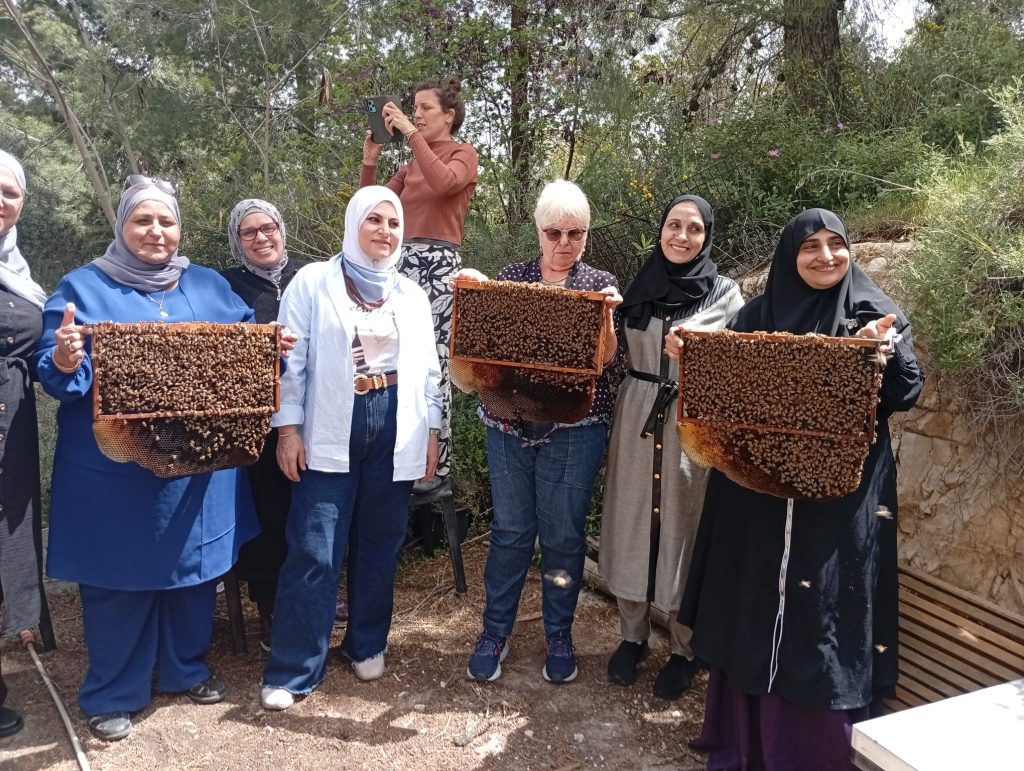
On Wednesday I attended an extraordinary and sweet event at the Sindyanna of the Galilee Visitors’ Centre. Twelve women who have learned beekeeping from legendry bee keeper and community activist Yossi Aud were meeting for the final session of their beekeeping course. The course was facilitated by Sindyanna of the Galilee and MA’AN Workers Association. After a delicious lunch, the group were presented with their certificates.

What a joyful occasion it was! And deep. The twelve women, half the group Arab Israeli, the other Jewish Israeli obviously have such deep affection for one another, and trust. There was a lot of laughter. In desperate times, when Israeli society is so polarized and trust is non-existent it felt healing to be with these women.

The group sat in a circle and I noticed the ebb and flow of movement between Arabs and Jews. Bridges had clearly been built. The women took turns to explain what becoming a beekeeper and spending time with the bees means to her. One Arab woman said that the bees helped her love her house again and gain confidence and energy. Another speaker said, ‘The bees saved my life.’

The Bees for Peace group is for women only, although some men are saying they want to join. Many of the women have very low levels of education and poor self confidence, and a mixed group would add an unnecessary complexity. One Arab woman said that her husband has been telling his friends that he is the beekeeper, despite having been very sceptical of his wife being part of the group in the beginning. The group laughed uproariously on hearing this.

One woman receiving her certificate was giving great ululations of joy. Someone explained to me that this was the first time in her life she’d ever received a certificate for anything.

Another woman told how she was previously afraid of bees and didn’t think she’d be able to come close, but now she is not afraid and has gained confidence in her life.

Before a practical session at the Bees for Peace, there are several sessions learning about the bees’ life cycle and the close encounter with the natural world and the social organization of the bees is obviously transformative. The women were awestruck to be at the Bee Freedom farm as a swarm took place. In her article about the project, Roni Ben Efrat of MA’AN Workers Association described it as a cosmic experience to be present when the bees swarm. https://wac-maan.org.il/bees-for-peace-11/

Yossi Aud, the course teacher, clearly loves what he does; and is loved by the women. Over lunch he explained that he has discovered that overcoming fear in one area of life (in this case, of stinging insects) leads to the possibility of overcoming other fears and developing trusting relationships where before there was deep mistrust. His Bees for Peace website says:

 ‘The “Bees for peace” project is aimed to teach us about the bees’ harmonious and wondrous way of living, and to inspire us to adopt their approach and behavioural patterns into our own life. Anyone who comes in contact with the bee is charmed.

The bees produce abundance and healing in the world and all their products are products of health and medicine.

This great ability is enabled thanks to the bees’ perfect cooperation, which creates harmony amongst themselves and their surroundings. When people learn to work for the bees’ welfare, much sensitivity and gentleness is developed, and that could translate into our daily life. In this way the bees teach us to act for society, to live in co-existence, let go of stigmas, and help us get closer to ourselves, others, the land and the world.[1]

One Israeli woman said that she had many times before been a member of a dialogue group with Arab Israelis, but that this experience was different. The women were learning new skills and information together. They were overcoming their fear of bees and at the same time of one another. This experience went ‘deep’ very quickly and strong bonds of love and trust have formed. One Israeli woman described how when her queen bee died ( a disaster for the hive) the rest of the group rallied round and supported her until the dilemma was solved.

As the group circled and intermingled and chatted and ate and laughed it was not difficult to imagine the activity in a hive of healthy bees where the social unit is united in its purpose.

We have heard concern, even alarm, over a number of years about bees failing to thrive, and how disastrous this is for human flourishing because the bees pollinate fruit and other food stuffs. How brilliant that this project, which now has over 300 women in honey production, is both helping and sustaining life on earth and renewing and repairing relationships which going forward will be vital in rebuilding a society which is just and equitable and where people can live without fear.

As he watched his latest group of graduate beekeepers mingle and chat and engage with one another, Yossi sat quietly smiling. He himself obviously gets great satisfaction from the project and so he should: such simple and yet complex engagement both with the bees and with the women gives hope. Fears can be overcome. People can come together and collaborate. Peace with justice is possible.


[1] https://www.yossiaud.co.il/bees-for-peace/

Call for Peace

Pope Francis’ last plea for peace

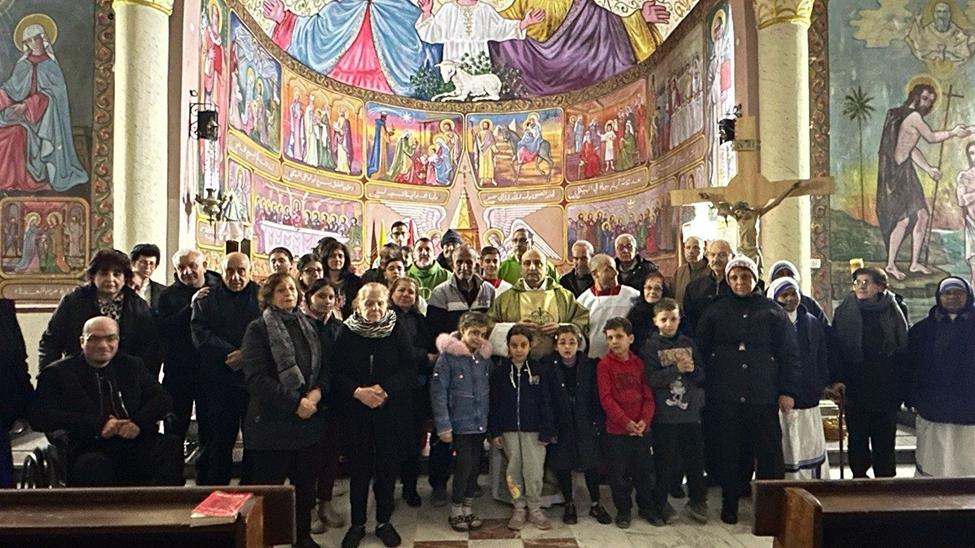
Many stories have been told about the piety and pastoral faithfulness of the late Pope Francis, but the story of his almost nightly conversations with Father Romanelli and the people of Holy Family Church in Gaza gives insight not only into Pope Francis and his priorities, but also makes visible the almost total lack of intervention by other world leaders.

Even when he was in hospital, Francis still phoned the little community of the faithful sheltering in the church. The number of Christians in Gaza was small to begin with, around a thousand, and has halved since bombardment began such a long time ago.

The congregation of Holy Family Church, Gaza with Father Romanelli

Francis would ask what they had eaten and would assure them of his prayers, even as he asked the people to pray for him. In an interview with Vatican News, the parish priest in Gaza, Father Romanelli said, “We continue to pray for Pope Francis and to praise God for the great gift of his person. Pope Francis was a shepherd who loved and followed, as we all know, our small community—praying and working for peace. We hope that the appeals he made, including the last one he had the strength to issue just hours before his passing, will be heard: that the bombs stop, that this war ends, that hostages and prisoners be freed, and that humanitarian aid to the population can resume and be delivered consistently.”[1]

Much has been made of the last public utterance of the Pope, wishing those gathered in the square before him a blessed Easter, but his message to the world, the Urbi et Orbi, has had less coverage.

The Pope wrote:

I would like us to renew our hope that peace is possible! From the Holy Sepulchre, the Church of the Resurrection, where this year Easter is being celebrated by Catholics and Orthodox on the same day, may the light of peace radiate throughout the Holy Land and the entire world. I express my closeness to the sufferings of Christians in Palestine and Israel, and to all the Israeli people and the Palestinian people. The growing climate of anti-Semitism throughout the world is worrisome. Yet at the same time, I think of the people of Gaza, and its Christian community in particular, where the terrible conflict continues to cause death and destruction and to create a dramatic and deplorable humanitarian situation. I appeal to the warring parties: call a ceasefire, release the hostages and come to the aid of a starving people that aspires to a future of peace![2]

He went on to draw attention to the dangers of a renewed arms race:

There can be no peace without freedom of religion, freedom of thought, freedom of expression and respect for the views of others.

Nor is peace possible without true disarmament! The requirement that every people provide for its own defence must not turn into a race to rearmament. The light of Easter impels us to break down the barriers that create division and are fraught with grave political and economic consequences. It impels us to care for one another, to increase our mutual solidarity, and to work for the integral development of each human person.[3]

Many leaders from around the globe and many faith leaders attended the funeral of Pope Francis in Rome on Saturday 26th April. In Israel the withdrawal of an expression of condolence and the attendance at the funeral of the Israeli ambassador to the Vatican rather than President or Prime Minister of Israel has been noted. Ha’aretz, in an editorial, pointed out that a total of 12 kings, 52 heads of state and 14 prime ministers attended the funeral mass, and that Israel stood alone.

The editorial opined:

‘Francis, the spiritual leader of more than 1 billion people worldwide, was a controversial pope within and outside the Catholic Church for several reasons. Even if the government had some reservations regarding his statements about the war in Gaza due to his sharp opposition to the war continuing and his repeated calls to end the humanitarian crisis in Gaza, its conduct still has no justification.’[4]

There has been a blockade on all humanitarian aid entering Gaza since early March. Both the World Food Programme and the UN, who have truckloads waiting for permission to enter Gaza, have warned that food has run out.[5]

Remarkably, the Gazan people are not asking to leave Gaza in large numbers, to be set free from their ‘giant cage’, as Fr. Romanelli describes it.

In Israel, demonstrations against the renewed assault on Gaza in Israel have continued. Support for the hostages and their families remains a chief concern, but more demonstrators are choosing to hold up photographs of dead Palestinian children, showing some awareness and concern. But not enough.

And world leaders are still not bringing to bear pressure on Israel, but continue to supply weapons and logistics, facilitating starvation and daily deaths from ongoing air strikes.

At this point it seems we are all complicit in genocide.

How can it be that the strongest voice raised against this horror belonged to an old, sick man, struggling to breathe? Pope Francis, who knew from his nightly calls what the reality is inside Gaza, can no longer call for ceasefire and hostage release and real negotiation. Who will call for a future of peace now?


[1] https://www.vaticannews.va/en/church/news/2025-04/fr-romanelli-may-pope-francis-plea-for-peace-be-heard.html

[2] https://www.vatican.va/content/francesco/en/messages/urbi/documents/20250420-urbi-et-orbi-pasqua.html

[3] https://www.vatican.va/content/francesco/en/messages/urbi/documents/20250420-urbi-et-orbi-pasqua.html

[4] https://www.haaretz.com/opinion/editorial/2025-04-27/ty-article-opinion/the-entire-world-attended-the-popes-funeral-except-for-israels-political-leadership/00000196-73aa-d41c-a7ff-ffef1d360000?lts=1745824426950

[5] https://www.bbc.com/news/articles/cn4wvvnzp39o

Humanitarian Call for Ceasefire Now

‘Protect civilians. Facilitate aid. Release hostages. Renew a ceasefire.’

This is the final line in an unprecedented press release issued by heads of OCHA, UNICEF, UNOPS, UNWRA, WFP and WHO on 7th April 2025. The whole press statement makes really grim reading, detailing the urgent and overwhelming humanitarian need in Gaza.

Palestinians inspect the damage at the Dar Al-Arqam school, where displaced people shelter, after it was hit by an Israeli strike on Thursday, in Gaza City, April 4, 2025. REUTERS/Mahmoud Issa/File Photo

‘For over a month, no commercial or humanitarian supplies have entered Gaza. More than 2.1 million people are trapped, bombed and starved again, while, at crossing points, food medicine, fuel and shelter supplies are piling up, and vital equipment is stuck.’

The press release starkly spells out that 25 World Food Programme bakeries have had to close for lack of supplies, that over 1,000 children have been killed in the first week after the ceasefire was broken, and that the health system is overwhelmed.

The heads of these world -renowned relief agencies go on to say that in 60 days of ceasefire they were able to deliver life-saving supplies to nearly every part of Gaza.

Now they can do nothing.

‘We are witnessing acts of war in Gaza that show an utter disregard for human life,’ they say.

Footage of the horror has slipped from world TV screens, but outside of Israel there is continuing awareness of ongoing genocide. Intent to destroy the infrastructure and force removal of the citizens of Gaza is beyond reasonable doubt. Inside Israel, however, despite some attendees holding up pictures of children killed in Gaza at rallies urging a ceasefire to save the remaining hostages, justification for Israel’s actions is widespread.

This is partly that Israelis have to seek out media coverage of the devastation and death in Gaza, but it is also a widely held conviction that every Gazan is culpable for the human rights atrocities carried out on 7th October 2023. ‘They voted for Hamas,’ people say, despite the fact that half the population of Gaza is under 16 and many more are too young to have voted in the last elections in 2006, which were by no means a landslide for Hamas.

Official investigations into the 7th October atrocities have so far failed to highlight Prime Minister Benjamin Netanyahu’s deliberate policy of bolstering Hamas to undermine Fatah, letting Qatar pump millions of dollars in. Now, because war has resumed, right wing extremist Itamar BenGvir has rejoined the government. He and others inside government have openly stated their aim to remove all Palestinians from the Gaza strip. President Donald Trump’s real estate Gaza-largo dream may not be far from the truth, and the desire to exploit the natural gas off Gaza’s cost is real.

The rest of the world might look on and wonder why ordinary Israelis seem unable to see that increasing violence and destruction and human misery in both Gaza and the occupied Palestinian territories can never lead to real peace.

Fear and humiliation are huge factors. As is the deliberate dehumanization of all Palestinians.

But we might also wonder at our own government and media’s failures. Even when evidence of the last moments of 15 humanitarian workers in the form of a mobile phone message recorded by Red Crescent medic Ref’at Radwan, executed by Israeli Forces in Gaza on March 23rd, was broadcast; the BBC headline was ‘Video footage appears to contradict Israeli account of Gaza medic killings’. On 8th April, BBC Verify did verify the account of the surviving medic Munther Abad and the phone footage recovered from the body of Radwan, who had been buried in a shallow grave.

Palestinians ask why Israeli statements are always given the benefit of the doubt while Palestinian  statements are discounted or downplayed. Some, like Rev Munther Isaac, argue that the reason is that Israelis are the colonisers and Palestinians the colonised. Daniel Munayer of Musalaha, an organisation which seeks to bring Palestinians and Israelis together to explore reconciliation, says that the shared foundation for such coming together has to be a conviction that the Occupation is not only bad for Palestinians; it is bad for Israelis too. He has also observed how in organisations of Palestinians and Israelis together there is a tendency for the Israelis to want to take the leadership roles, and says that this must be resisted.

Israel has a right to self-defence, but Palestinians who defend themselves are seen as terrorists and not freedom fighters. I am not condoning the firing of rockets into Israel from Gaza. Any attack on civilians is against international law. Hamas and others who carried out October 7th attacks should be tried under international law, as should those who are carrying out genocide on Gazans and, increasingly, in the West Bank, pushing people out of their homes, seeking to erase refugee camps and killing 555 Palestinians since January 2024, including 102 children.[1]


[1] https://www.ochaopt.org/content/west-bank-monthly-snapshot-casualties-property-damage-and-displacement-january-2025

‘Protect civilians. Facilitate aid. Release hostages. Renew a ceasefire.’

The aid agencies are seeking to prevent further catastrophe, predicting a death toll which far exceeds the 60,000 already numbered. World leaders, who have much else on their plate at the moment, must step up to protect the UN and its agencies and to honour international law. If they do not, we are all much the poorer, at risk of the sort of totalitarian behaviour that seems to be on the rise.

Citizens have to hold those leaders to account, by focussing on their own leaders and demanding war criminals be held responsible. This is not easy, as sensitivity about perceived antisemitism and a strong Zionist lobby make people reluctant to criticise the government of Israel. And the current persecution of peaceful pro-Palestinian activists in the US and Germany gives everyone pause for thought.

People wonder what they can do. The humanitarian agencies have given us a place to begin. Our politicians must receive the message loud and clear:

‘Protect civilians. Facilitate aid. Release hostages. Renew a ceasefire.’

Of trees and struggle…

At the beginning of February there is a Jewish holiday called Tu Bi Shvat. It is a tree planting ceremony made popular through the 20th century, and has all sorts of ecological and environmental overtones, and celebrates the goodness of God and the fruitfulness of the earth.

In Um al Kheir this year Tu Bi Shvat was used as a cynical landgrab by some settlers from the nearby Carmel settlement. The village elder had been warning for weeks something was afoot, as ground used by the Palestinian community, and protected as part of the master plan for the village, was prepared for planting.

On Tu Bi Shvat the settlers came. They not only planted about 50 young olive trees, they also planted a large flagpole and Israeli flag and that other important signifier of occupation: a security camera.

Olive trees planted in community space Um al Kheir

They planted their trees, they surrounded them with wire fence to protect them, they threw their excess wood and wire over the fence into a Palestinian family’s yard. And then they prayed.

Because this land is now appropriated, Palestinians can no longer walk on it. It was one of the gathering places in the village where tents would be put up for feast days and to celebrate weddings.

The settlers not only took this land, they made a path from the gate of the settlement, painting the stones edging the path blue and white. The intimidation and the push for Palestinian villagers to give up and move is relentless.

The community had tried to get a lawyer to make a court order to stop the olive tree planting, but none were available. There are so many violations, so many arrests, so many acts of destruction, that the lawyers are overwhelmed.

What would you do if some bullying neighbours harassed you and your family in this way? Arguing does no good and any display of anger or attempt to protect property is seen as an attack. The person protesting is far more likely to be arrested than the aggressor.

What the villagers of Um al Kheir did was to plant their own olive trees. They bought 50 young saplings and planted them between the blue and white painted stones and along the pathway the settlers had built. Having been called by the settlers, the army came and perhaps surprisingly did not side with the settlers. ‘It is their land,’ they said. ‘They can plant there if they want.’

The tiny olive trees can be pulled up with no effort, or trampled underfoot, or they will quickly parch in the relentless hot sun. The settlers’ trees are more mature and better protected. Yet it is a tiny act of non-violent resistance for the villagers of Um al Kheir to plant those trees.

One of the fragile olive trees to be planted alongside the new path.

Over many years, the protective presence of foreign nationals has helped contain the settlement expansion, but with a more rightwing government committed to expansion, and since October 7th 2023, the protective presence feels as useless as King Kanute ordering back the tide.

The creative and humorous use of the counter-planting of olive trees, the sheer determination to keep holding on, makes me think that we who watch and hear about these daily indignities at a distance must be able to do something.

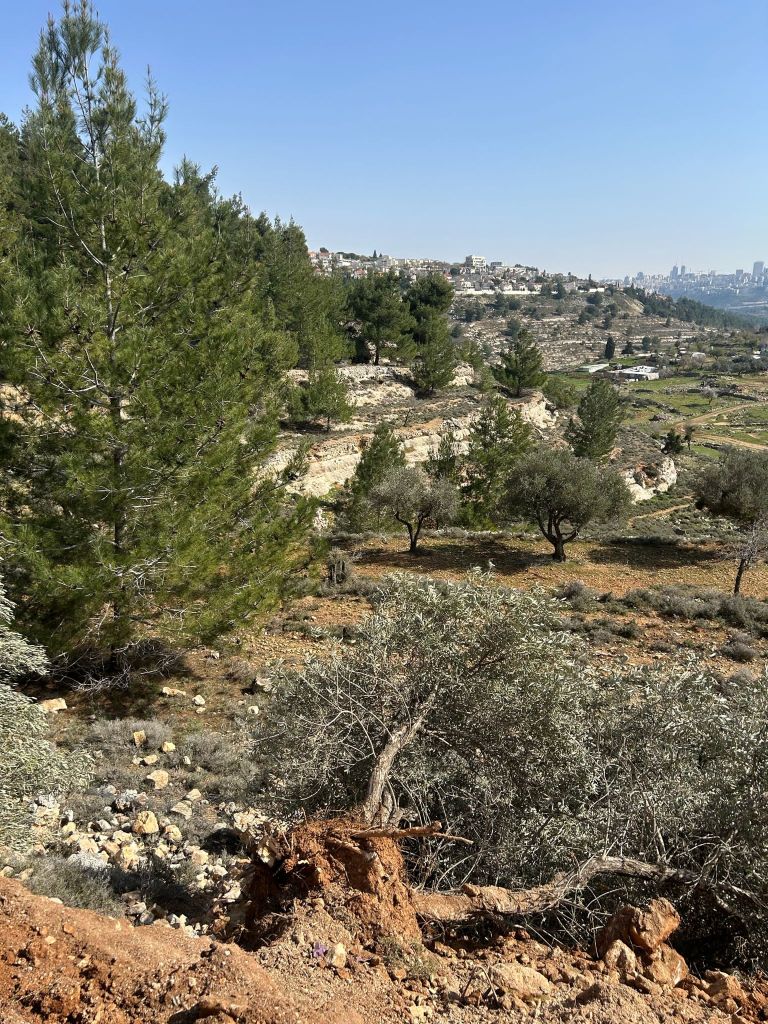
The same day we saw the competing olive groves in Um Al Khair my colleague was taken to see an uprooted orchard in the Seam area near Jerusalem. This is Palestinian land cut off from the occupied Palestinian Territories by the Separation Barrier. Palestinians who live and farm there do not have Israeli citizenship or papers. They are in no-man’s land.

Earlier that day a bulldozer had come and uprooted  all sorts of fruit trees, including some mature olive trees. No demolition order. No explanation.

Mature olive tree, uprooted.

The family were devastated. But even in their distress they were gathering up some of the fallen fruit and offering it to their visitors. And the next day they had replanted some of the trees and tidied up. The water source on the land had not been discovered, although the pipes above ground had been cut. They would continue. This is sumud.

Olive trees planted as an act of colonization. Olive trees planted as an act of resistance. Olive trees ripped up as an act of destruction and economic vandalism. Olive trees replanted and pruned in the hope they will recover and bear fruit.

The prophet Micah had a vision of a time when swords are beaten into plough shares:

Nation will never again go to war, never prepare for battle again.

Everyone will live in peace among their own vineyards and fig trees

And no-one will make them afraid

The Lord Almighty has promised this. (Micah 4:4)

The image of the fruit trees flourishing is poignant, and a reminder how things should be for all people.

No Other Way

‘I’m sorry my father is not here to greet you,’ said our seventeen year old guide. And then, after a pause: ‘He’s gone to Hollywood to the Oscars.’

By now we know that ‘No Other Land’ the documentary made jointly by an Israeli and a Palestinian film maker won best picture in the documentary category. Our guide’s father had been invited as a friend of the Palestinian filmmaker and activist Basel Adra.

Please watch the documentary either on Channel 4 https://www.channel4.com/programmes/no-other-land or online where it is available. And please also watch the acceptance speeches made by Basel Adra and Yuval Abraham. https://www.bbc.com/news/articles/cvg1vdr4dzko Watch them to get a sense of the bleak but beautiful landscape of the South Hebron Hills, to see every inch of cultivatable land terraced and planted, to get a sense of the poverty of the subsistence living by the Bedouin people but most of all to get a glimpse of the dignity and courage of people who have been dispossessed several times over and whose community is threatened today.

Susiya has been a contested spot since the mid 1980s when the cave-dwelling community who grazed their flocks around the ancient site of Susiya were displaced from around the site of an ancient synagogue and an Israeli settlement also called Susya was founded on land which the Israeli Courts had accepted was in Palestinian ownership from the Ottoman period. The archeological site was appropriated by the Israeli Defense Force, and in 1986 the entire area was designated a closed military zone. Masaffer Yatta is in Area C, part of the Occupied Territories under Israeli military control.

Palestinian structures have demolition orders hanging over them and they are not allowed to extend or build in any way. Since October 7th aggressive behaviour by some settlers has increased and because some settlers are in uniform, and armed, the villagers don’t know who to turn to when they are attacked.

Our young guide described how at night settlers would come and lob stones at the tin roof of their home, and a couple of weeks ago a car was set on fire.

Our guide is in grade 12 at school and the local school doesn’t cater for that. He needs to go by bus to school in nearby Yatta. Following 7th October, however, school was cancelled for 2 months. Temporary ‘flying’ check points prevent the school bus from reaching Susiya regularly and online learning is difficult.

He has a plan though. When he finishes school he plans to go to the US to improve his English (which is already very good) and then apply to college there. Like so many Palestinians he is bright, humourous, hospitable and engaging.

But the future for his community and the other 19 communities that make up the area of Masafer Yatta is very bleak. As I visited 3 of these communities with an ecumenical group from the UK and the US the phrase we heard over and over was, ‘Since 7th October…’

Since 7th October, settlers have been armed and some are in uniform. Since 7th October attacks on livestock, cars and demolitions of structures has increased. Since 7th October several people have been killed and the Police and the army do nothing. A Palestinian lifting a stick in self defence will likely be arrested immediately, but extreme settlers, caught on camera in the act of killing and destroying act with impunity.

OCHA reports for Susiya say,

Susiya, in Masafer Yatta area of southern Hebron, has seen a steady rise in documented settler incidents from five incidents in 2021 to 33 in 2024, with the most significant increase being in incidents that resulted in property damage, particularly affecting agricultural and animal-related structures as well as olive groves. Both communities have witnessed a sharp rise in settler incidents over the past two years, resulting in near-daily intimidation, night raids, threats, and destruction of property—generating a coercive environment that push Palestinians out of their current locations. Between 7 October 2023 and 31 December 2024, OCHA documented the displacement of 1,762 Palestinians, including 856 children, mainly in Bedouin and herding communities across the West Bank, citing heightened attacks by Israeli settlers and access restrictions.[1]

Reaction to the Oscar success of No Other Land is instructive. As well as those who applaud and hope that many more people will see and understand the suffering of the Palestinians in the West Bank, and those who denounce Yuval Abraham as a self-hating Jew and conflate West Bank Palestinians with Hamas, and reshow video footage of atrocities committed on October 7th, there are Palestinians who argue that Basel Adra could have made the film on his own. Their argument is that Yuval’s involvement is just another example of settler colonialism, occupying a project for his own ends.

My sense is that to have people in Israel watch the movie, Yuval’s involvement was essential.

The phrase ‘no other land’ is used by a woman in the film displaced from the traditional cave dwelling she and her family had moved to when her house was destroyed. She meant there is nowhere else her family can go, but the phrase picks up the core dilemma for both Israelis and Palestinians. There are approximately 7.5 m Israelis and 7.5m Palestinians, including Arab Israelis and residents of Gaza. Neither will be able to successfully remove the other, but how can trust be built and land shared?

In his Oscar acceptance speech Yuval said, When I look at Basel I see my brother but we are unequal. We live in a regime where I am free under civilian law but Basel has to live under military laws that destroy his life and he cannot control.

He continued: “There is a different path. A political solution. Without ethnic supremacy, with national rights for both of our people. And I have to say, as I am here, the foreign policy in this country is helping to block this path.

“Why? Can’t you see that we are intertwined? That my people can be truly safe if Basel’s people are truly free and safe. There is another way. It’s not too late for life, for the living. There is no other way.”[2]


[1] https://www.unocha.org/publications/report/occupied-palestinian-territory/humanitarian-situation-update-262-west-bank

[2] https://www.theguardian.com/film/2025/mar/03/no-other-land-wins-best-documentary-feature-oscar

A picture worth a thousand words

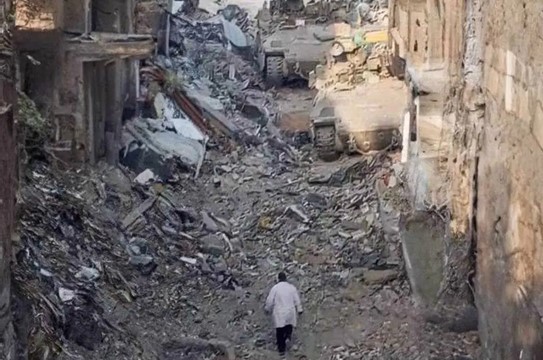
Sometimes a picture is worth a thousand words. The image of Dr Hussam Abu Safiya, in a clean white coat, walking through the rubble of northern Gaza on December 27th 2024 towards an Israeli tank, is such an image.

Dr Abu Safiya, director of Kamal Adwan Hospital in northern Gaza, refused to leave until the last moment. The Israeli Army had demanded forced removal of all remaining patients but there is nowhere safe to send them.

It is believed that Dr Abu Safiya is being held in the notorious Sde Teiman Detention Centre.

Israeli sources claim the hospital was a Hamas stronghold and that Dr Abu Safiya is a colonel with Hamas. They say they have arrested 240 Hamas and Islamic Jihad terrorists, 15 of whom took part in the October 7th 2023 attacks.

Dr Abu Safiya’s supporters, including the World Health Organisation, characterize him as a compassionate and dedicated doctor who refused to leave his patients.

I can’t prove or disprove claim or counterclaim. But I see the kind and battered face of a doctor who refused to leave suffering people behind. I know his son Ibrahim was killed a few months ago, yet he continued to care for others.

I also know that the label ‘terrorist’ has been used continuously to justify the most appalling destruction and slaughter. The imbalance of the solitary figure walking steadily towards two large military tanks sums up the inequality of the struggle.

Yes, somehow, Hamas has still managed to fire rockets in the last few days. Frightening for those who must wonder where they will fall and what damage the intercepted shrapnel might do. And a death sentence for the desperate families in leaking rat-infested tents among whom the Hamas fighters are hiding.

For the pattern continues as it began on 7th October. Hamas makes an audacious, horrific attack; a suicide attack for its operatives and murder for hundreds who are not Hamas operatives. Israel, traumatized, frightened, shamed, hits back with overwhelming force.

The rules of war about targeting of journalists and protection of medics have been torn up. Women and children have been seen as legitimate targets. Even the rules for protection of civilians have been weaponized so that families are forced to move again and again with fewer and fewer resources.

And despite condemnation and the case brought by South Africa to the International Criminal Court, and the interim judgement of potential genocide, and the arrest warrants issued by the International Court of Justice, the world community seems powerless.

Francesca Albanese, Special Rapporteur on the Occupied Palestinian Territory to the UN, when she reported her latest findings in December 2024, called out their hypocrisy, and the danger to human rights globally of allowing the Gazan genocide to continue unchecked.

And we can see it. When our moral compass is so off that we can rationalize the arrest of a doctor and accept interrogation and humiliation of suspects as normal, then we are all in serious danger.

The UN Security Council at the beginning of December almost passed a resolution for ceasefire in Gaza, but the US vetoed it. Although release for remaining hostages was part of the call, the ceasefire was not conditional on hostage release. And so, to Israel, and therefore to the US; no deal.

The failure of the institutions set up to protect the vulnerable is infuriating and frightening. It seems little can be done. But the image of the man in a white coat calmly walking towards a tank has galvanized people world wide to photograph themselves, unmasked, holding a handmade sign: #freeDrHussamAbuSafiya.

For almost the first time since October 2023 there has been a small public demonstration in Tel Aviv calling for Abu Safiya’s release and for release of all captives and an end to genocide in Gaza. This is a small but significant step. One man’s image, facing a tank as resolutely as the student Fang Zheng did in Tiananmen Square, is helping others to be brave.

I have a friend who every Sunday since October 7th has stood with friends and strangers in silent vigil in a park near where he lives, a multicultural area of Glasgow. He says he doesn’t pray. But just standing is a prayer: a rebuke, a hope, a solidarity with those who have few choices left and are hanging on to life. Just standing, like Dr Abu Safiya with the wreckage of northern Gaza all around him.

You may have written to your MP before, but it is time to write again. The UK’s silence in the face of the destruction and annihilation and more, its complicity in supplying and resourcing the state of Israel with weapons, intelligence and logistics requires citizens to say, ‘No! Not in my name.’

The photograph of Dr Abu Safiya walking towards the tanks is already iconic. When governments are held accountable for actions and inactions, as they must be, this picture will speak of humanity, bravery and resilience. A picture worth a thousand words.

What’s in a Symbol?

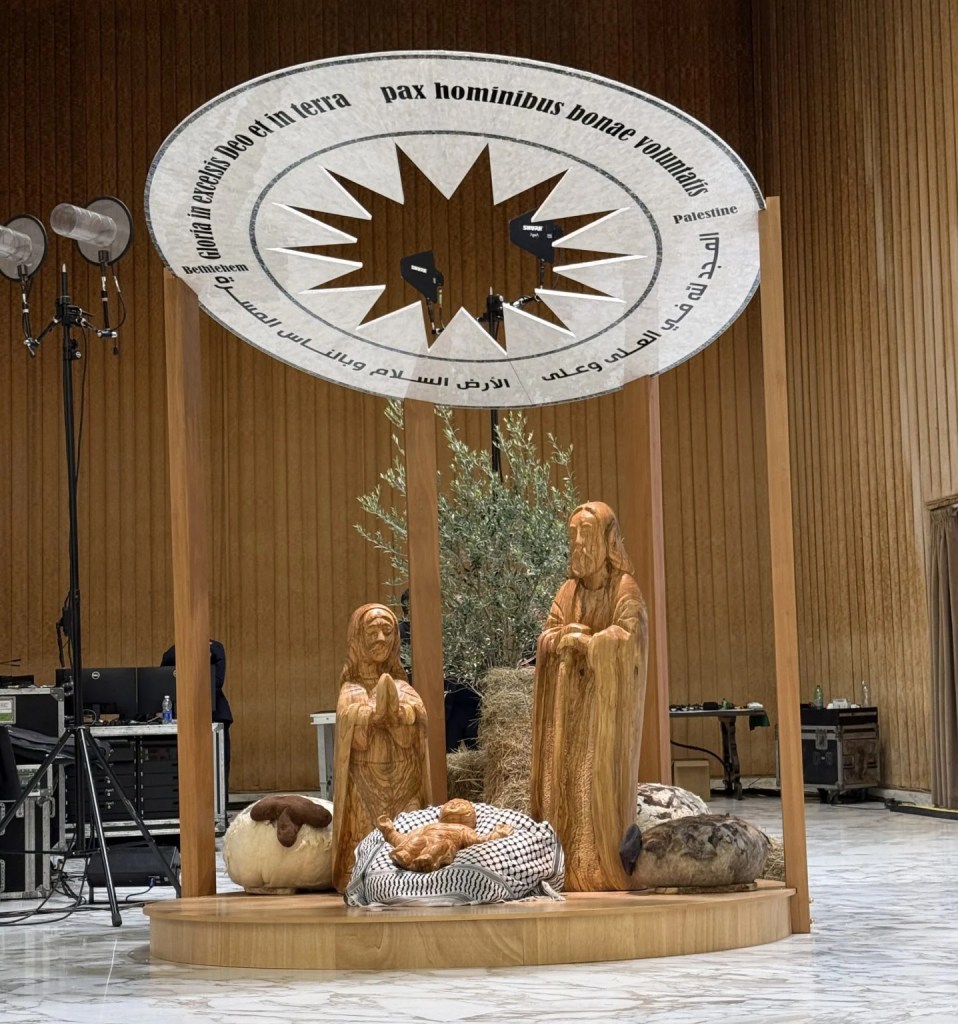
A keffiyeh. The media focussed on a keffiyeh which had been tucked at the last minute around the manger scene from Bethlehem which was blessed at the Vatican by the Pope on the 7th December 2024.

And the manger and the keffiyeh and the baby were removed following representation from various lobby groups who claimed the presence of the black and white checkered scarf politicised a religious symbol, making something violent out of something peaceful. The baby will return on 25th December, the Vatican Press Office says, but will the keffiyeh?

How to unpack this?

Let’s begin with the facts. The manger scene designed by Bethlehem artists from Dar Al-Kalima University, Faten Nastas Mitwasi and Johny Andonia, and made by Bethlehem crafts people, was a gift to the Pope from the State of Palestine.[1]

‘The scene’s three wooden figures, the baby Jesus flanked by his parents Mary and Joseph, were handmade from a single olive tree by Peter Khano. The practice of olive wood carving is a pillar of the community’s economic and cultural identity dating back to the 4th century.

The Star of Bethlehem that hangs overhead is made of mother of pearl by the Piccirillo Center, using a kind of ornamentation that was brought to Bethlehem by Franciscan monks from Damascus in the 15th century. The star is encircled by an inscription in both Latin and Arab reading: “Glory to God in the highest, and on earth peace, goodwill to all people.”

Meanwhile, the scene’s sheep were made of hand felted wool by children from Ma’n Lilhayt, a Catholic charity that provides employment opportunities for disabled people.’[2]

Even before the addition of the keffiyeh this was a political statement. The people of Bethlehem have been effectively besieged since October 7th 2023 and the tourism industry, their chief source of income, is catatonic. People are suffering.

In his remarks before the blessing the Pope said, ‘Enough wars, enough violence.’

And from the facts to their significance.

Has the keffiyeh distracted attention from the plight of olive wood workers and craftsmen and the vulnerable and marginal adults who are part of Ma’n Lilhayt? Perhaps. But the reaction to the keffiyeh tells us something about both the invisibility of the Palestinian people and the equation made by some between the Palestinian people and violence. The Keffiyeh does not in itself represent violence. It is a practical garment used traditionally to protect against the searing heat. It was popularised when worn by Yasser Arafat and has been worn since by those who sympathise with the Palestinian cause; most who simply want genocide to stop, justice to be done and people to be free of fear. (Freedom from fear is desperately needed for both Israelis and Palestinians).

The Scottish Laity Network hosted Khawla Badwan and Alison Phipps in a wonderful and powerful Advent reflection entitled ‘Keep Telling of Gaza’. [3]Both Khawla and Alison were wearing keffiyeh. Since October 7th 2023 Alison and then Khawla have been documenting the genocide in Gaza in short poems posted on social media. A collection of their work also called Keep Telling of Gaza has been published by Sidhe Press.[4] It is available as an e-book on their website or you can buy the hard copy through Amazon.

Khawla, a Palestinian refugee who spent fourteen years in Gaza, is a ’scholar of language, education, culture and social justice’. One of her poems in the collection explores the use of symbols like the keffiyeh, and reclaims the ethics of love.

Ethics of Love

Existing for one another

Against their politics of hate

With the aesthetics of symbols:

A watermelon

A keffiyeh

A poster

A sticker

A kite

A flag

A pin

Building a movement

Of love, solidarity, and collective struggle

With eyes meeting, tearing and comforting

In our thousands, the chant goes

In our millions, the crowd repeats

We are all Palestinians, the spirit echoes

Looking after one another

Holding our otherness and togetherness

Remaking life with ethics of love

The Palestinian flag is banned in the State of Israel, so the watermelon, red, white, black and green, has come to represent it on tee-shirts, badges and stickers. It is hard to overstate how reviled these simple signs of solidarity are. On a recent return to Israel one of my colleagues was questioned intensely in Ben Gurion Airport about his loyalties and intentions because in a forgotten flap in the rucksack there was a tiny Palestinian flag pin given to him by an acquaintance as he left for the airport. Symbols are potent.

The yellow ribbon demanding release of Israeli hostages is ubiquitous here. When I see it, I mentally add to its significance. I want it to stand for not only freedom for Israeli hostages but also for freedom for Gazans and for Palestinian political prisoners held in Israeli jails, many without charge.

I want the keffiyeh in the manger to stand for all forgotten people, principally the Palestinians, but all marginalized and made invisible around the globe. People for whom the child in the manger was born.

I hope they put the keffiyeh back in the manger. And if they don’t, I will imagine it there.


[1] https://news.artnet.com/art-world/palestinian-artists-nativity-scene-vatican-2583106

[2] Felt goods available from Hadeel Fairtrade Palestinian Crafts https://www.hadeel.org/suppliers/maan-lil-hayat/

[3] https://www.youtube.com/watch?v=T4Av5lNFvG8

[4] https://sidhe-press.eu/books/keep-telling-of-gaza/

Prayers of Lament & Hope

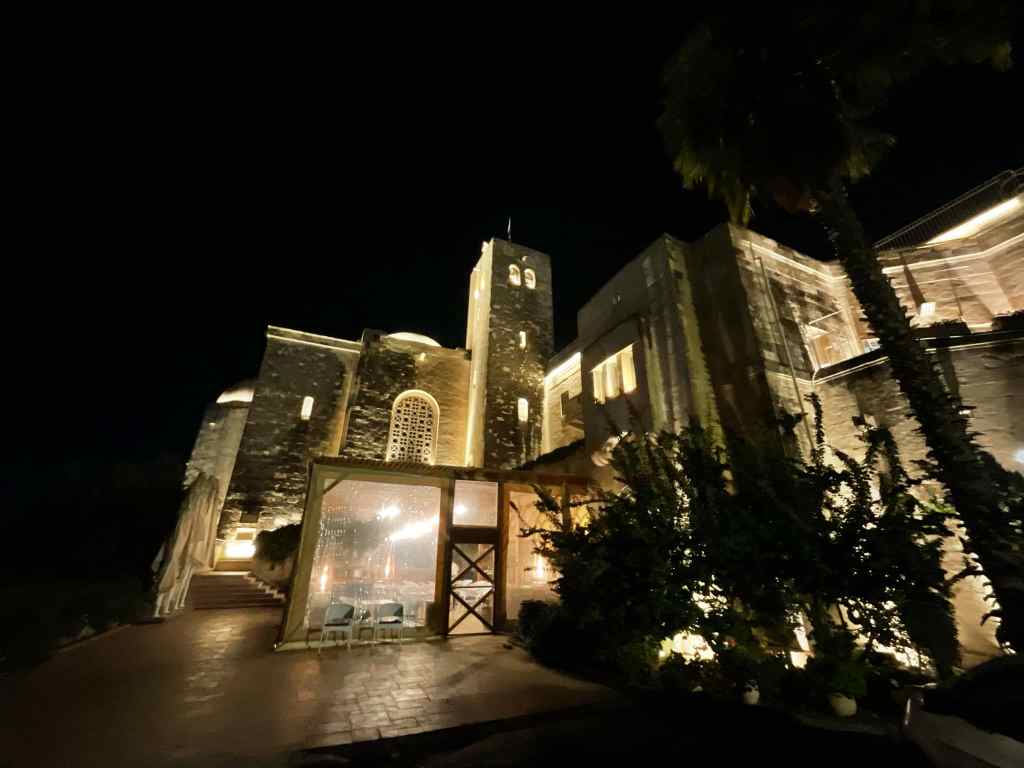
It is a tradition here in St Andrew’s Jerusalem and Tiberias to hold a service of worship on St Andrew’s Day and to invite friends and partners. The Scots House Hotel https://www.simplebooking.it/ibe2/hotel/9441?lang=EN&cur=ILS  provides a wonderful buffet. Coming as it does, before Advent and the busy Christmas season, it is a staple of the ecumenical and interfaith calendar.

And, on the same day, our friends in Scotland, Friends of St Andrew’s Jerusalem and Tiberias https://www.friendsofstandrews.com/ hold their service annually in St Cuthbert’s Edinburgh. The moderator of the previous year is generally the preacher. This year the Very Rev Sally Foster Fulton spoke. You can watch that service here: https://www.youtube.com/watch?v=gPqASVoDYZk

There was no service in Jerusalem last year, and this year my colleague Rev Dr Stewart Gillan and I felt we wanted a quieter, more reflective style of worship. We called it Prayers of lament and hope. We asked Rev Ines Fischer of the Lutheran congregation at St Augusta Victoria, who regularly hosts prayers in the style of Taize´, to help us lead worship. We also enjoyed music by the Collage Duo at the beginning and end.

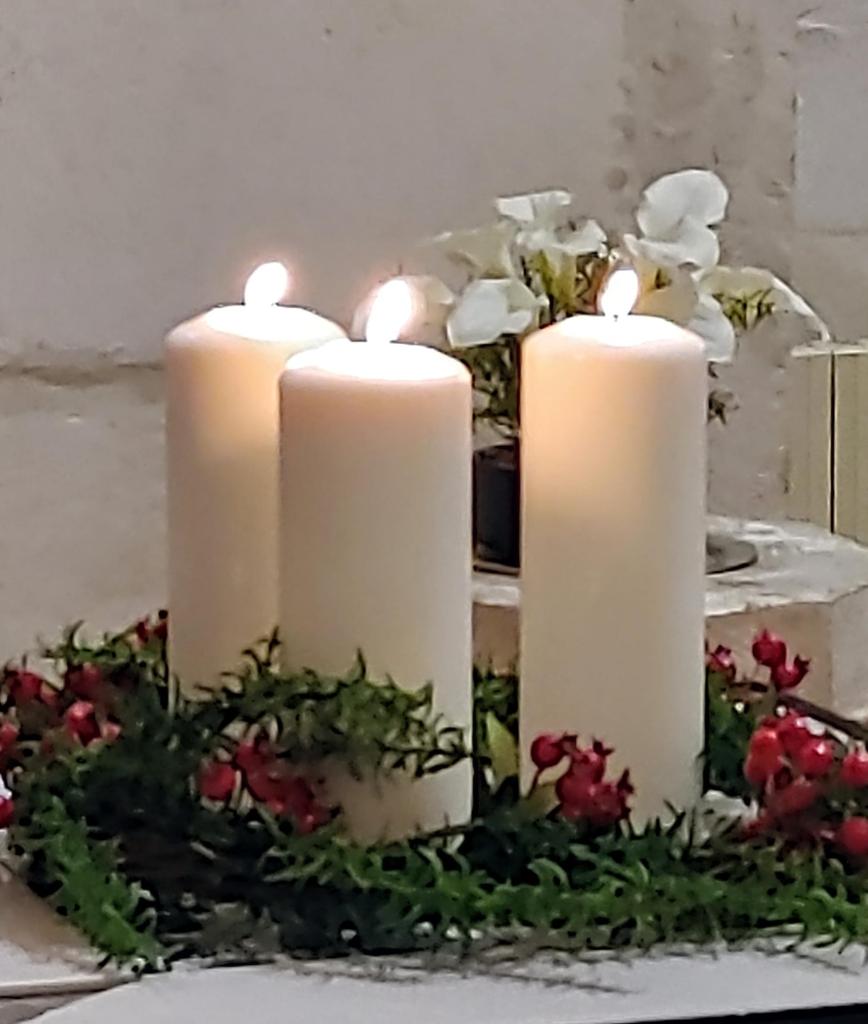
The service began with the lighting of three candles representing God above us, God beside us and God within us. As well as some well-known Taize´ songs, we sang two short songs from Scotland ‘Lord of life, we come to you’ and a final blessing sung to the tune Ae Fond Kiss.

A highlight for me was the testimonies of hope from 3 friends and partners.

Anton Goodman of Rabbis for Human Rights https://www.rhr.org.il/eng began by saying that hope belongs to the privileged and the desperate. The privileged expect to be bailed out, and the desperate have no resources except hope for a better tomorrow.

Anton says, ‘Hope is mentioned in the Talmud as a core value in life. While we are alive we have hope which is only lost at death. Some Rabbis say that the whole purpose of the commandments and Jewish lifestyle are to engender hope… However, there is no direct commandment which demands the intention of hope. We are commanded to love, to have good intentions, to feel compassion and empathy, but not to hope.’

This is significant, Anton thinks, because it is the action of loving that leads to hope.

Shirabe Yamada of Sunbula https://www.sunbula.org/ thought she had nothing to say about hope, and then she remembered the women who continue to use their embroidery skills to bring some income for their families, and the students of Dar Al-Khalema University who have been inspired by a recent Sunbula workshop to incorporate traditional embroidery designs into their fashion and textile designs.

And I would add that Sunbula’s commitment to continue to support the women of the two embroidery projects in Gaza gives me hope.

Rami read the words of our third speaker who could not be present because he cannot get a permit to leave the West Bank. Awda is a teacher in a Bedouin community. He wrote ‘The last year has felt like 50 years, and the challenges are far from over. We rely on your solidarity and care now more than ever.’

Settlers have become increasingly bold in their attacks and the IDF does not stop them. If a Palestinian resists with force he or she will arrested at once.

‘Despite everything,’ Awda writes, ‘we continue to resist the occupation along with the constant attacks and harassment from the settlers. The situation remains extremely unstable. At times, the army and settlers will close down roads, isolating people and restricting access to our cities, clinics, and hospitals, making life even more difficult.’

The financial situation is really tough for everyone, and people are living in constant worry, stress, and fear. The weight of uncertainty feels like too much to bear. We don’t have the same hope we once had, and it’s hard to see a way forward.

Following the testimonies there was a time of silence. And we sang in Arabic, English and Hebrew, ‘God of peace, in your wisdom give us the will to seek peace.’

The congregation was smaller than usual: some 50 rather than 120. There was a spaciousness, though, a chance to really talk at supper, and a recognition that lament and hope belong together, and that it had been good to pray together in this way.

It is a dark and worrying time all around the Middle East. Yet, the words of John’s gospel stay with me: ‘The light shines in the darkness and the darkness cannot put it out.’ John 1:5