Full disclosure: I’ve not yet been to Gaza, though hope to visit in the Autumn. Following last week’s aerial bombardment, I’ve been reading and thinking about the place a lot. And I want to focus on the children.
As I said in my last blog, Gaza is a tiny strip of land with a border with Egypt and the sea and the other two borders with Israel. Of the population of 2.1 million, 50% are children. The blockade of Gaza began in 2007 when Hamas gained power. Israel has officially withdrawn from Gaza, but since in reality Israel controls all access of people and goods, Gaza is under siege.
Since 2007 when Hamas ousted Fatah and Israel and Egypt blockaded the strip there have been 5 major attacks by Israel targeting militants or tunnels or rocket launch sites: and Israel defends these attacks as appropriate actions to protect Israeli citizens. But the firepower at the disposal of Palestinian militants is dwarfed by the attack and defense weapons and troops available to Israel. Palestinians prefer not to use the word ‘war’ because that suggests an equal struggle. They call them aggressions.
In between the aggressions, there is constant observation and drone activity. Passes to travel in and out of Gaza have been hard to come by, even in cases of medical emergency, though in the past year more work visas have been issued. 50% of those living in Gaza are unemployed. A majority of families are reliant on UN food aid. Basic amenities like water and electricity and medicine often run out.
This is the environment in which these children are growing up. After the last aggression in May 2021 and the pandemic, Save the Children repeated a survey first carried out in 2018. The first survey showed 60% of children felt anxious and afraid when separated from their parents. In 2022, before the latest escalation, 90% reported symptoms associated with trauma. 96% of caregivers also reported chronic stress and helplessness. https://resourcecentre.savethechildren.net/document/trapped-the-impact-of-15-years-of-blockade-on-the-mental-health-of-gazas-children/
Children aged 15 and under have never lived in any other situation, and there is not time between attacks to recover psychologically. Symptoms of PTSD are common, but the ‘post’ is a misnomer: the trauma is ongoing.
In the August 2022 escalation 46 people were killed, 16 of whom were children. There were more than 450 injuries, many of them children. I wrote about Alaa Qaddoum in my last blog, killed aged 5. One of the photographs of her released by the family shows her wearing her graduation t-shirt for kindergarten and clutching her certificate. Her grandfather said, ‘What did she do? What crime did she commit? She wanted to go to nursery, she was asking for clothes and books.’
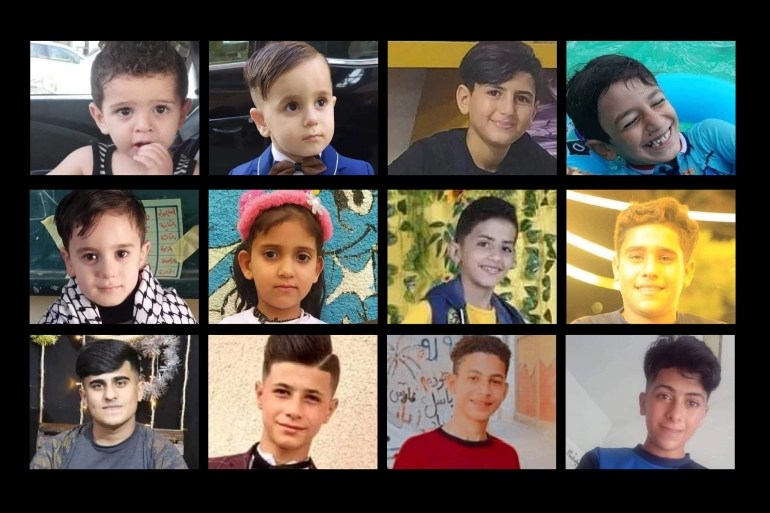
The bright faces of 12 of the 16 victims, in a graphic by Defense for Children International, look out onto a future that is not theirs. I find it remarkable that against the odds, and with all their fears, Gazan children are still studying at school, still dreaming of careers, still taking degrees. In a Deep Dive conversation, available on Youtube entitled Gaza is a Children’s Prison: Mental health Crisis[1] 17 year old Hind Wihaidi said, ‘People are doing their best to make connections to achieve their dreams…they are trying to create opportunities out of the rubble.’ But she also pointed out that children’s basic human rights are not being met.
Israel says that some of the children died because of misfiring Islamic Jihadi rockets, though Gazans dispute that. Israel’s Iron Dome prevented most PIJ rockets reaching their targets, but Israeli children also felt fear and had to spend time in air raid shelters. Their distress is real too.
So what is the game plan? What happens next? How can all the young people of Israel, Palestine and Gaza be allowed to flourish?
[1] https://www.youtube.com/watch?v=aR3Sc53JdLw&ab_channel=PalestineDeepDive
 Stepping out of the boat...