Never Doubt…

Back in another time and place when I was part of a ministry team in Cranhill in Glasgow, along with many other Priority Area teams, we needed help. The communication in and between our team was fractious and difficult. We were not getting along well and we were not performing well. Christian love – agape- was worn thin and hanging by a thread.

This is not unusual in teams, and particularly in teams where one member is an employee line managed by the other and that other, a post holder and not an employee, seems to operate very differently from established employment practice.

By serendipity, Verene Nicolas[1] a longtime practitioner and trainer in NVC lives in Glasgow and she came alongside us and helped us. NVC (non violent communication) was developed in the US by Marshall Rosenberg. For Rosenberg, a Jew, NVC is spiritual but not religious and thus open to all faiths and none.
The principles of NVC, sometimes also known as collaborative communication, are that all communication is driven by a person’s needs, and that we often attempt to have our needs met at the expense of another’s. Even if not physical, this is often violent. That is how we have learned to survive: fight or flight.

Rosenberg and other NVC practitioners invite us to pause before reacting and choose our response.

NVC began focusing on interpersonal relationships against the background of the Vietnam War and the civil rights movement, but practitioners and trainers have begun to take seriously the various lenses through which we understand the world, principally patriarchy and also colonialism. They call this the systemic lens, and NVC is evolving into NGL (Non Violent Global Liberation)

A community of love and communion seems very far from our experience around the world and here in Israel-Palestine today. But here, as around the world, there are people who are practicing the skills of compassionate communication: observing the interaction, naming the feelings, understanding underlying needs and making requests of self and others.

These are the skills the ministry teams in Priority Areas in Scotland practiced over time with Verene’s patient and gentle help. These are the skills the world needs not only at individual and family levels but at systemic levels to overcome patterns of domination and exploitation which rob others of their freedom and undermine the humanity of all.

For the past six weeks I have been refreshing my NVC practice in an online global community. Although an extensive network, it is still a very small and counter cultural movement. One of the people I most admire here in Israel-Palestine is Nadia Giol. Nadia manages the visitors’ centre at Sindyanna in Cana, but she is also a qualified NVC trainer. She is uniquely placed to work in this context because she is fluent in Arabic and Hebrew (as well as Spanish and English and no doubt other tongues). Recently Nadia shared how difficult it is for Palestinian Israelis (Arab Israelis) to build trust with Palestinians living in the occupied Palestinian territories. But she perseveres.

It was Margaret Mead who said, ‘Never doubt that a small group of thoughtful, committed citizens can change the world; indeed, it’s the only thing that ever has.’ Nadia and her colleagues at Sindyanna, and the many other NGOs working for peace with justice for all, and the worldwide NGL prove that.


[1] https://verenenicolas.org/

Hope is a flickering candle

One of the things I do here in Tiberias is offer hospitality to members of the Ecumenical Accompaniment Programme (EAPPI) of the World Council of Churches. These are people who come from all over the world to stand as witness and to record violations of international law in Israel and the occupied Palestinian territories. They are here for 3 months at a time and live in community in 5 different locations in East Jerusalem, the West Bank and the Jordan Valley.

‘A group of ecumenical accompaniers serving from 15 April – 23 June found that the number of human rights violations keeps increasing. The most recent group of accompaniers reported 863 violations, whereas about one year ago, accompaniers reported 301 violations. This represents a 186.4% increase.’[1]

Living in community, in the heat (just now) and witnessing relentless micro aggressions and violation of International Human Rights is exhausting mentally, physically and spiritually. Visiting bereaved families is especially exhausting.

Here in Tiberias EAPPIs come for two or three days at a time and rest. Some sleep a lot, others enjoy the pool at the Scots Hotel and others visit sites around the Sea of Galilee.

Although EAPPIs serve as witnesses, who do not intervene and who are committed only to non-violent accompaniment through checkpoints or through agricultural gates or to be present at confrontations between illegal Israeli settlers and communities, they have been experiencing increased harassment themselves. Recently, access to the Old City of Jerusalem has been denied to EAPPIs wearing their distinctive khaki vest with the dove of peace on the back.

As part of their handover ceremony a candle flame is passed from the departing team to the new team.

EAPPIs witness and record and collate statistics, but more than that they sit with families and stand beside them. Although their witnessing is hard, harrowing work there is some encouragement.

“We thank you for your humanity and support to us,” said a man from the Susiya community in Massafer Yatta.

“I am really happy to see you. You are doing great work,” added a lawyer from the Arab Al-Kaabneh Bedouin community in the Jerusalem area.[2]

Although the EAPPIs reports are collated and published, it is not easy always to find them. Following EAPPI on Facebook is a good step and I have added a couple of links in footnotes here.

I want to flag an event late in September World Week for Peace in Palestine and Israel – 16-23 September 2023 (Including UN International Day of Peace, 21 September). There is material on the WCC website which requires some interpretation before use in worship or prayer groups or schools.[3]

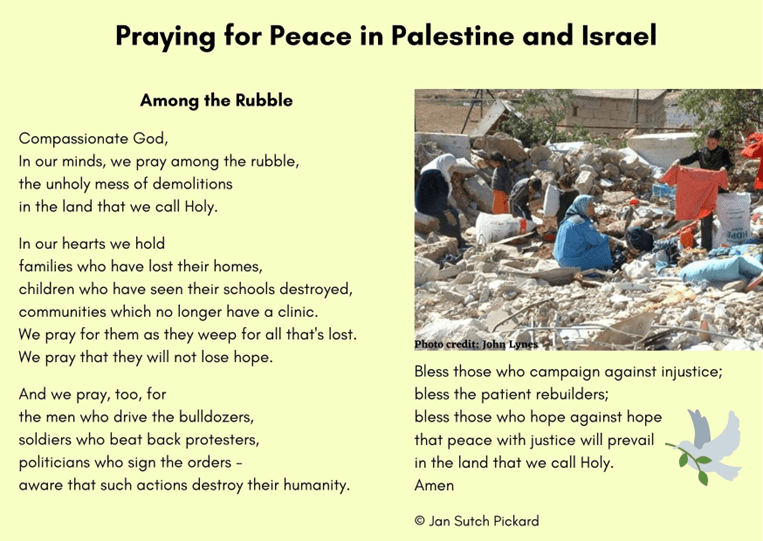
Pax Christe has produced some prayer cards incorporating a prayer by Jan Sutch Pickard which can be ordered from them or printed off.[4]

Thinking about the escalation of violence and about those who experience it and those who witness it, I have been reflecting on the meaning of hope. I think in the past I would have reckoned that hope is founded on signs of the kin-dom: love, joy, peace etc. Here, where there are few grounds for hope at the moment (though love, joy and peace can be found) I am reflecting that perhaps hope is build on vision: a prophetic, flickering candle which will not go out.


[2] https://www.oikoumene.org/events/world-week-for-peace-in-palestine-and-israel

[3] https://www.oikoumene.org/news/ecumenical-accompaniers-see-human-rights-violations-nearly-triple-during-past-year

[4] https://paxchristi.org.uk/campaigns/israel-and-palestine/world-week-for-peace-in-pi/

Reasonableness

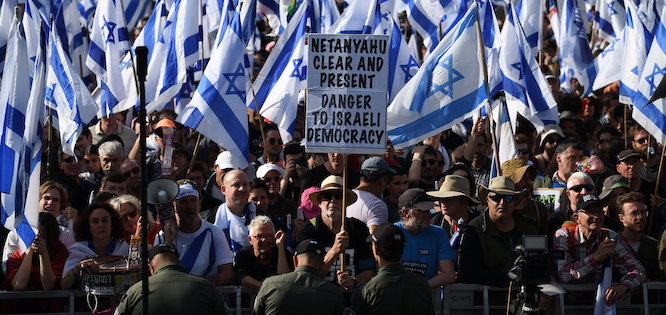
For the past thirty weeks hundreds of thousands of Israelis have protested on the streets of Tel Aviv, Jerusalem and elsewhere about the Israeli government’s proposed legislation about the Supreme Court and the so-called Reasonableness Standard which was passed 64-0 by the Knesset on 24th July 2023.

While there has been some activity in support of the measures principally by settlement dwellers in the West Bank many in mainstream Israeli society have formed an unlikely alliance to protect, as they see it, Israeli democracy and their freedoms.

But Arab Israelis have by and large been absent from the demonstrations and only a fraction of the pro-democracy protesters sees a connection between the package of laws Netenyahu’s right wing coalition partners are looking for and the expansion of settlement activity in the occupied Palestinian territories which they want to carry out with haste. An even smaller fraction see any connection with the systematic, systemic injustice faced by Palestinians for more than fifty years.

Unlike in the UK and the US there is only one legislative body in Israel, so the Supreme Court is the only check and balance in place. So far this year, Israel’s High Court of Justice disqualified Shas party chairman Arye Dery from serving as health and interior minister on the basis that his appointment was “unreasonable in the extreme” as he has been convicted three times of criminal offenses and failed in his previous public positions to “serve the public loyally and lawfully.” Dery’s convictions include tax evasion, corruption as a public official, bribery and fraud.

Netanyahu’s own conflict of interest as someone with a current court case against him has been scrutinized.

And the new legislation is itself under scrutiny in the court.

But to call the Israeli government and legal system ‘reasonable’ is really a stretch of the meaning of the word when considering recent court cases. The soldier who killed Eyad Halak the Jerusalem adult with autism was found not guilty of any wrong-doing, despite evidence that a caregiver with Eyad was shouting to the soldier not to shoot.

The Nasser family of the Tent of Nations https://tentofnations.com/ have been going to court for more than twenty years to assert their family’s right to land for which they have papers, and the case is still not settled.

Western governments have expressed concern about the Middle East’s democratic state dropping into authoritarianism. But whole sections of the population are disadvantaged systemically both in Israel itself and in the occupied Palestinian territories. Authoritarianism is already here.

Recently Mary Robinson and Ban Ki-moon visited Israel/0Pt as representatives of the Elders – a group of elder world leaders- and their report highlights the deterioration of the situation ‘on the ground’. https://balfourproject.org/elders-warn-of-consequences-of-one-state-reality-in-israel-and-palestine/

Ban Ki-moon, Deputy Chair of The Elders and former UN Secretary-General, said: 

“I leave Israel and Palestine with a heavy heart. I have seen and heard compelling evidence of a one-state reality, with systemic impunity for violators of international law and human rights. There is a lack of political vision and leadership in Israel and Palestine and among Israel’s allies, who continue to revert to a short-term approach. The people of Israel and Palestine, and the world, deserve better. And they deserve it now, before it is too late.” 

From all around there is evidence of an emboldment among those who seek to impose an ultraorthodox religious Zionism on everyone whether in local planning issues or in an increase in attacks by Settlers on Palestinians.

One of the cruelest and stupidest things I have seen was a video of soldiers pouring concrete into an agricultural water source in south Hebron. I had to check several sources before I could believe it. There have been no arrests and no injuries but the environmental stupidity and the cruelty of doing this to a water source used by 25 families beggars belief.https://www.middleeastmonitor.com/20230727-israeli-soldiers-seal-palestinian-well-with-concrete/

No, there is nothing reasonable about this.

Women vital in peacemaking

UN Resolution 1325 is not well known. But it is revolutionary. It was agreed unanimously by the UN security council on 20th October 2000, and it recognizes both the disproportionate effect of war and violence on women, and the absence of women in peace talks and negotiations around the globe.

Twenty three years later it is very much aspirational and does not seem to feature in the thinking of most of the world’s leaders.

Yet at grassroots level, with some notable historic precedents such as the Peace Women of Northern Ireland to encourage and motivate, there is a movement seeking to raise the profile of Resolution 1325 and to train and equip women to demand their place.

Here in Israel and the oPt, where legal moves at the moment may further isolate and disadvantage women, Resolution 1325 is becoming symbol of a movement.

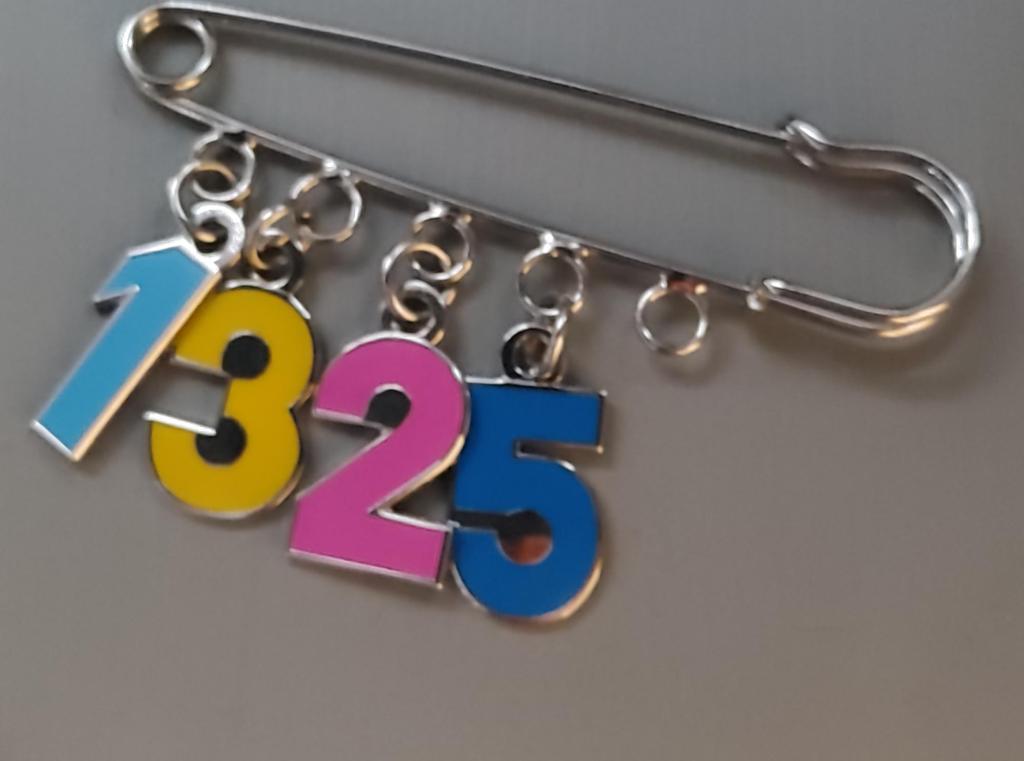
I first heard about Resolution 1325 from Ela and Tamar of It’ach-Ma’aki, (Women Lawyers for Social Justice). They told me about the impressive range of their work to support women across Israel and the occupied Palestinian territories, whether documenting forced evictions in Masafer Yatta https://www.itach.org.il/1325/masafer-yatta/?lang=en or supporting Arab women to obtain their entitlement to benefits to pay for childcare, or working with Bedouin women. They gave me a pin to remind me about resolution 1325, which I’ve been wearing since!

One of Itach-Ma’aki’s partners is an organisation called Women Wage Peace. https://www.womenwagepeace.org.il/en Along with their Palestinian partners Sisters of the Sun they held a conference this week in a poor Arab town north of Caesarea called Jist al Zaqr. In the sweltering heat, in a secondary school, using drama and graffiti art and listening exercises, Israeli and Palestinian women explored their lives and learned from one another. After the serious business of the day was over the women and the children with them went to the beach. It is so rare for Palestinians to get to the sea. They stayed in the water for hours.

The climax of the day was a commitment to the Mothers’ Call. ‘We Palestinian and Israeli women from all walks of life, are united in the human desire for a future of peace, freedom, equality, rights and security for our children and the next generations.’ The call ends ‘We call on our leaders to show courage and vision to bring about this historical change, to which we all aspire. We join hands in determination and partnership to bring hope back to our peoples.’

Here in Israel/oPt dissent, division and conflict is embedded, and violence is worsening. Encouraged by right wing elements of the government, settlers are attacking Palestinian shepherds and villages. There is a new song doing the rounds, written after attacks on Huwara, which uses the melody of a popular right wing artist and overlays the lyrics, “What is burning down…Huwwara/Houses and cars…Huwwara/ Evicting from [Huwwara] old women, the young and girls too.” Apparently it is going viral on social media. With less publicity (posting on social media was not allowed at the conference) Women Wage Peace is quietly strengthening the movement and growing the conviction that the role of women in peacemaking is vital.

Two Walks

Flag Day. The authorities prepared for it by drafting in 3000 extra Police and troops. Palestinians dread it as the route of the walk is through the Muslim Quarter of the Old City and even more provocative, on previous Flag Days Zionist extremists have ‘walked’ the Al Aksa compound, the disputed Temple Mount. This year people like Ben Gvir, the right wing government minister, who makes no secret of his intention to have complete domination, proclaimed ‘Israel is in charge’ as he entered the Compound with tight security.[1] But the day passed more peacefully than feared and there were no rockets fired from Gaza and therefore no retaliatory Israeli bombardment. And Ben Gvir made his photo op and speech the Sunday after Flag Day, dialling back the confrontation.

We were thankful the day passed, but another crisis point will be along soon and the rhetoric is confrontational and vindictive.

The week before Flag Day I got a call from one of the organisers of an interfaith walk for peace and justice being led by Rabbis for Human Rights. https://www.rhr.org.il/eng Basing their mandate on the call to justice throughout their Scriptures RHR stand alongside Palestinian farmers in the West Bank who are being driven off their land by militant settlers and help harvest olives in contested olive groves. They seek to raise awareness and create a coalition among Israeli Jews of all sorts committed to human rights: peace with justice.

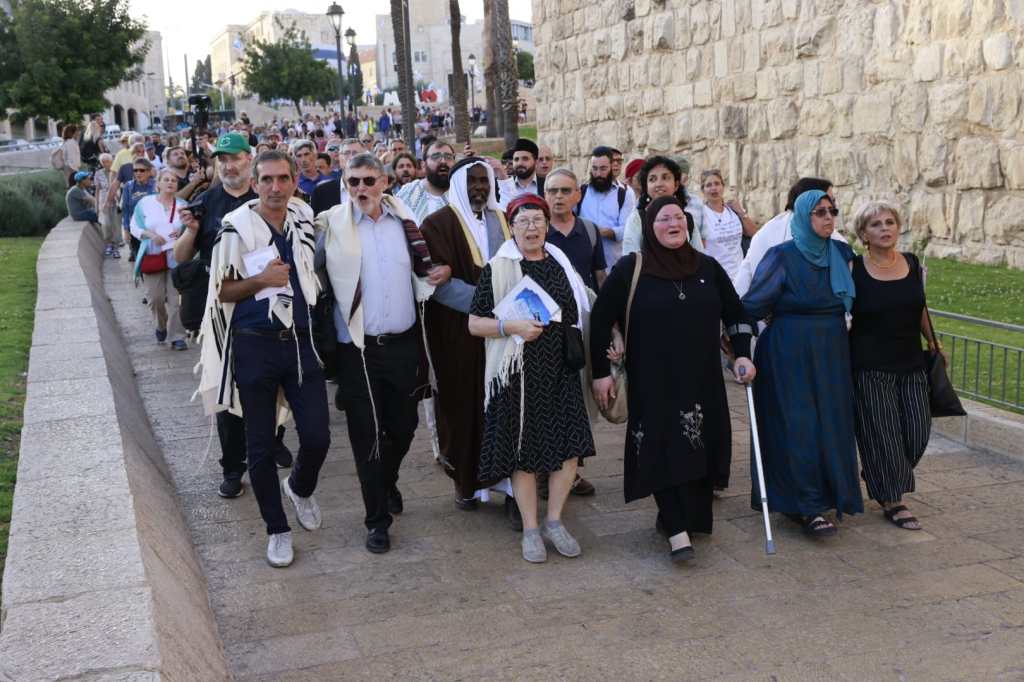
I went along to Zion Square in Jerusalem as one of their speakers, not sure what I was attending. I found about 200 people of all ages: Jews, Christians and Muslims singing psalms and holding hands and walking hopefully in the face of heckling from one or two and curiosity from many who had never seen such a mixed and gentle demonstration.

As I walked with them I remembered the words of American Civil Rights activist Cornell West, ‘Never forget that justice is what love looks like in public.’ West’s words in turn echo the words of MLK, ‘Power at its best is love implementing the demands of justice, and justice at its best is power correcting everything that stands against love.’

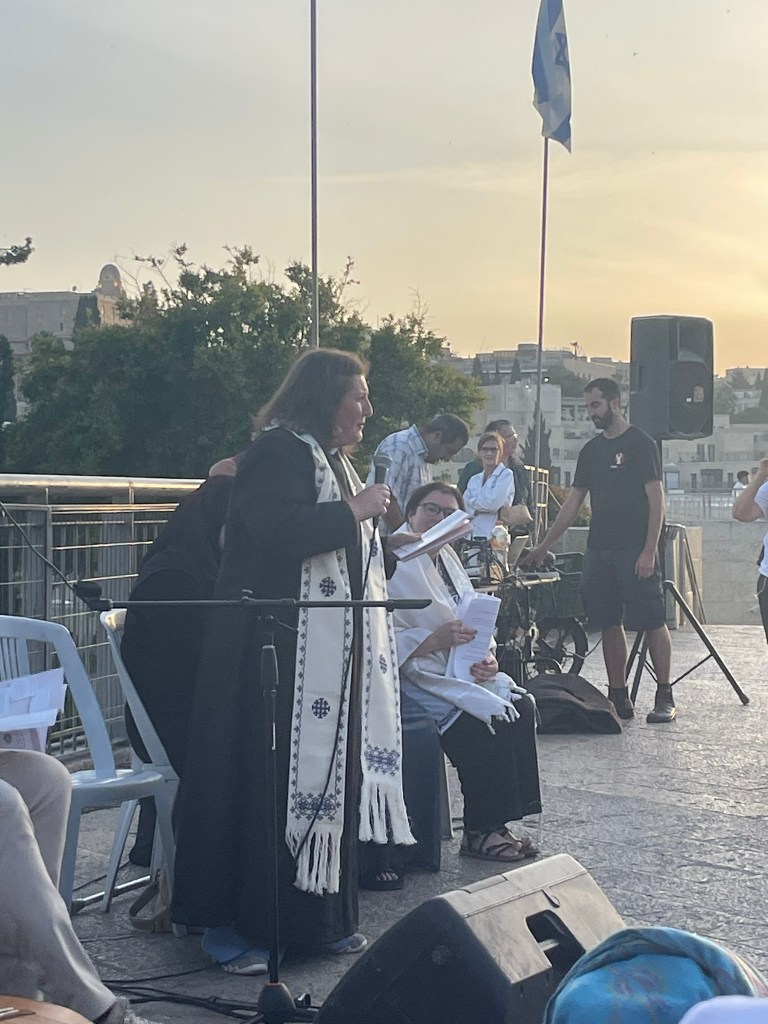
As we gathered at  Jaffa Gate against the setting sun over the Jerusalem skyline I felt the love as each speaker was listened to respectfully and each spoke from their tradition of the power of love. And I was glad to speak from my tradition – the Jesus tradition – the companion who promised another companion so his followers would continue to be shaped into a community of love.

Here is part of what I said:

Shalom, salaam. The Hebrew and Arabic words for ‘peace’ are so much richer than the English; for ‘peace’ is not just the absence of struggle and strife but the presence of well being and flourishing and harmony.

Like a full belly at the end of a good meal

Like a weaned child resting on a parent’s breast.

Like laughter and tears shared

Like people of different faith and traditions coming together not to erase the difference but to celebrate diversity, while recognizing the deep human connection to one another and our even deeper connection to the earth and all its creatures and the breath of life that holds all in being.

‘In God we live and move and have our being.’

And I finished with a prayer:

Encircling God, cover us with grace, breathe into us your love, that we may breathe out justice and mercy, and all for Love’s sake. Amen.


[1] https://www.reuters.com/world/middle-east/far-right-minister-says-israel-in-charge-during-visit-jerusalem-holy-site-2023-05-21/#:~:text=%22I’m%20happy%20to%20ascend,the%20site%20of%20repeated%20confrontations.

The Holy Land and Us: Part 2?

Sarah Agla Rob Rinder

If you haven’t yet watched ‘The Holy Land and Us: Our Untold Stories’ fronted and narrated by Rob Rinder and Sarah Agla and available on iPlayer, it is worth watching. Rinder and Agla, along with two more citizen journalists per episode explore their family histories from a Jewish and Palestinian perspective. It is ‘Who do you think you are?’ with a particular focus.

All the participants are moved to tears by hearing about their ancestors’ heroism or trauma or loss. Rinder explores from the point of view of his uncle who went from Nazi concentration camp to Palestine post war and then fought for the formation of the State of Israel. Agla explores the story of her Palestinian grandparents evicted from their village in the Galilee which no longer exists. Jack Seale in his Guardian review of the programme says, ‘A documentary that will make viewers on each side sympathise with the other? Its an ambitious undertaking, but the Holy Land and Us: Our Untold Stories is a fine attempt at hitting an extremely narrow target.’[1]

For Seale, and perhaps for Rinder, the risky part of the exercise is simply giving Palestinians prime time TV time to share their family history as one of the 700,000 displaced by what is called The Nakba. And in the face of some who proclaim ‘There is no such thing as a Palestinian’ and ‘Israel has sole rights to all the land between the Mediterranean and the River Jordan’ it perhaps needs to begin here. What I noticed, however, was how separate the two narratives were. Perhaps the most poignant overlap is the moment where Daniel from London, whose father came to fight for the formation of the State of Israel but never talked about it, realizes the danger he had faced and the costly sacrifices he had made, and wept. The voiceover from Rinder spelled out the cost to Palestinians: ‘More than 50,000 Palestinians lost their homes when Israeli forces captured Lydda and Ramle.’

But at no point did the participants meet to share their stories, and the narrative focused narrowly on the formation of Israel in 1948. 1967 and all that has occurred since did not feature.

It is important that there is a space for both narratives to be heard but I am looking forward to Series 2 where the participants travel together and explore their stories together, mining deep their shared pain and trauma and loss. There has to be opportunity for both sides of the narrative to exist in the same space and be felt together so that out of a common experience of trauma and loss, which underlies both strands of story, an alternative future can be imagined. Painful. Difficult. But in order for it to be possible to share the small land of historic Palestine and present day Israel/occupied Palestinian territories such shared empathic listening will be needed.


[1] Jack Seale The Guardian Tuesday 14th March, 2023

Demonstrations and Democracy

Thousands of protesters rally in Jerusalem on March 27, 2023 against the government’s plan for judicial overhaul. (Gili Yaari/NurPhoto via Getty Images)

For the past 14 weeks in Israel there have been growing protests against proposed changes to the legal system, particularly to the Supreme Court, which will weaken the power of the judiciary and put more power into the hands of whoever is in government. The new coalition of right wing settlers and religious Zionists has already started legislating. Last Thursday it is estimated 500,000 Israelis were on the streets. This Thursday there were even more. It is the biggest civil protest in Israeli history. But a very significant group is largely missing from the protests, despite being the group most affected by inequality and injustice. 20% of the population of 48 Israel is Palestinian or Arab Israeli. Why are they not on the streets?

There are several answers. One is that they have not been invited. The vast majority of those protesting for civil rights simply don’t see how their Palestinian neighbours have been systematically denied their rights. And they don’t make the connection between the changes in the judiciary and the push to take occupation further. Netanyahu has tweeted that “the Jewish people have an exclusive and unquestionable right to all areas of the Land of Israel”; sole rights, in other words, to the land between the Mediterranean and the Jordan. And extremist settlers are emboldened, as the horrific recent violence at Huwara and neighbouring West Bank villages shows. Arab Israelis are fearful that if they do join the protests, the fractured groups which make up the Israeli community will unite against them.

One Palestinian Israeli friend of mine is advising his friends to stay back and watch the drama play out between European Ashkenazi Jews who have shaped much of public life including the courts since Israel was founded and Mishrazi Jews of North African and Middle Eastern origin, who now make up 60% of the Jewish population. Mishrazi Jews would be more in favour of the changes to the powers of the judiciary and the legislature than Ashkenazi. And of course, there are many secular Israelis who oppose the formation of a solely Jewish state.

Since Netanyahu brought right wing and extreme settler parties into coalition, violence against Palestinians by some settlers while Police and military stand by and do nothing has been increasing. The worst recent example was the fire razing and destruction caused in Huwara and surrounding villages after a Palestinian killed an Israeli.

Most of those on the streets see their human rights as something separate from the Occupation or ‘the Palestinian question’, but the government needs to weaken the courts so settlement building and expansion can continue with impunity. The ‘reforms’ are not only about Netanyahu’s ‘get out of jail free’ card.

Why do well meaning, justice defending Israelis apparently not see the biggest set of injustices in the land? Jonathan Kuttab, a Palestinian Christian human rights lawyer, in his new book Beyond the Two State Solution https://jonathankuttab.org/2020/11/23/beyond-the-two-states-by-jonathan-kuttab/ pinpoints the reason as fear. Understandable fear, given the history of the Jewish people, that their land is their only home and loosening a grip on that will make them vulnerable to displacement and even annihilation.

But if fear stops you seeing the 7 million Palestinians with whom you share the land as human beings equal in the eyes of God and under the law, then you have a big problem. And Palestinians who don’t understand that the land will have to be shared for peace to take root also have a problem.

There are so few places where Jews and Palestinians can have this conversation. It is easy to get dispirited and pessimistic. There is a change going on, however. The US government is being more critical of Netanyahu than ever before and while Rishi Sunak is making deals with Netanyahu, the UK ambassador to the UN is sharply critical of Finance Minister Smotrich’s inflammatory remarks negating the existence of a people known as Palestinians.

I have one Jewish friend who sees this as a moment to be grasped to push for genuine change and genuine democracy and civil rights. I have another Palestinian friend who says, ‘It’ll settle down, you’ll see. These upsets are always coming along.’ They can’t both be right.

Holding a Space

I have not written anything here in my blog for some time. I recently read in someone else’s blog something like this:

‘When I’d been here (in Israel) a couple of days I had pages to write. After a week or so, I could write one page. Now I understand how complicated everything is and I can hardly write a word.’ (If you wrote this and are reading it, I’m sorry I can’t credit you: I can’t remember where I read it!)

But I identify with the truth of it.

I have been here in the Holy Land for more than nine months as Mission Partner for the Church of Scotland and Associate Minister for St Andrew’s Jerusalem and Tiberias. ‘Hmm,’ said one wisecracker,’ long enough to give birth!’

Well, long enough to be thoroughly confused about what it means to be Mission Partner here and how to live faithfully here and be useful.

I represent a very small denomination in a land where the Christian population is tiny and diminishing. I see and hear about the suffering of the Palestinian people, but I also see and hear the fear of the Jewish population who are not all the same and not all treated the same by the State and by their neighbours. I have heard the pride and the anguish of mothers about their children serving in the IDF. I have seen and heard of the violence and humiliation meted out to Palestinians on a daily basis.

I heard the other day of a Palestinian Christian who was walking to work in the Old City of Jerusalem. He came across some Police intimidating and beating up some Palestinian youth aged 13 or 14. He began filming on his phone. And then he became the target. They took his ID and now he is afraid that every time he goes to the old City he will be targeted again. Like many before him he thinks of his family and what kind of future they can have in the face of such injustice.

In recent days both President Herzog and Tor Wennesland, Special Coordinator for the Middle East Peace Process and leader of the UN Mission, have warned that in the light of proposed changes to the powers of the judiciary, the announced development of more settlements in the West Bank and the danger of collapse of the Palestinian Authority, the State of Israel finds itself in perilous days. In the occupied Palestinian territories, there is the prospect of economic collapse following the pandemic years and systemic failure of government, little possibility for family life, weariness with repeating the same stories of injustice and the world apparently doing nothing.

Every day, it seems, there are deaths and arrests. Every day desperate and suicidal Palestinians, often grieving multiple family members, bring more murder and grief and unleash harsh collective punishment.

Is another bloodbath inevitable? And what can I do in the face of such overwhelming darkness?

In some ways the answer is simple (simplistic?) As the church year turns into the season of Lent I am called to follow Jesus on the Way of the Cross. I am called to befriend, accompany, provide hospitality, witness and report.

And while the Israel/Palestine conflict is not an equal one, and hugely unjust, I am still called to hold a space: for refusing polarization, for conversation, for prayer, for dialogue, and holding the whole region in prayer. Amen. So be it.

Hospitality

For the recent AGM of The Friends of St Andrews Jerusalem and Tiberias I produced a short video introducing myself and my role. I am very pleased the new committee of the The Friends has recruited some new folk and look forward to working with them.

Production values for the video show room for improvement, but I hope you find it interesting.